
John Elias and the Drunkards
NOTE BEFORE READING: references are indicated by bold numbers in brackets [1] and footnoted at the bottom of the article. The list of sources follow. All photographs are my own.
John Elias (1774-1841) is arguably the most powerful preacher Wales has ever produced. He belonged to the second generation of the Calvinistic Methodists of Wales, taking the baton from other the previous generation, the likes of Howell Harris, Daniel Rowland, William Williams of Pantycelyn, and Howel Davies. The mid to late eighteenth century had seen thousands of people come to a saving faith in Christ as a result of the many revivals led by these powerful preachers. The converted were nurtured spiritually through societal meetings called the seiat in Welsh. At these weekly meetings they would sing hymns, pray, receive teaching from the scriptures, and very openly share their spiritual experiences of temptation, sin, and the joy of walking with God In their daily lives.
Elias was an extraordinary orator and preacher. At the height of his ministry he feared nothing and no one but God alone. He had no hesitation in walking into the midst of the drunkards, gamblers and traders during a Sunday fair, setting up a box, standing upon it, praying aloud, singing hymns, and commanding the attention of the crowd through his powerful preaching. He addressed their sins directly, without fear or compromise, yet with such love an grace he offered them hope and peace through the gospel of Christ. At five foot and ten inches—though apparently he seemed taller—he had a dark complexion with high cheekbones which gave his face a sternness, and his face was scarred by smallpox which he had suffered with as a child. His voice was so clear that ten thousand people could hear him clearly in an open field.[1] Of his eyes and face, R. Parry, recalling the presence of Elias in the pulpit said: “But his eyes—his eyes: his great soul thrusts into them in flame. Living speech is in every sinew and muscle of his face.”[2] And of his ability to capture the attention of the congregation, Parry recalls the following:
Elias was an extraordinary orator and preacher. At the height of his ministry he feared nothing and no one but God alone. He had no hesitation in walking into the midst of the drunkards, gamblers and traders during a Sunday fair, setting up a box, standing upon it, praying aloud, singing hymns, and commanding the attention of the crowd through his powerful preaching. He addressed their sins directly, without fear or compromise, yet with such love an grace he offered them hope and peace through the gospel of Christ. At five foot and ten inches—though apparently he seemed taller—he had a dark complexion with high cheekbones which gave his face a sternness, and his face was scarred by smallpox which he had suffered with as a child. His voice was so clear that ten thousand people could hear him clearly in an open field.[1] Of his eyes and face, R. Parry, recalling the presence of Elias in the pulpit said: “But his eyes—his eyes: his great soul thrusts into them in flame. Living speech is in every sinew and muscle of his face.”[2] And of his ability to capture the attention of the congregation, Parry recalls the following:
[John Elias] cries out, “Listen now.” Oh, such an expression is hardly needed at this moment; the real feat would be for anyone not to listen now. Every head present has become one great ear from the very beginning. His spirit has been set ablaze by the heat of the truth as it is in Jesus. Anxiety and expectation have clothed every face, and every ear is fastened to the door of his speech. He now appears like a commander standing before the multitude, with the sword of the Spirit in his hand, and as though he himself is conscious that he is under the direct guidance of his Master. He seems determined that some sinner shall be delivered from danger in this meeting, even if he should never preach again. Indeed, he now appears not only as though he is aware that “the Captain of the Lord’s host” is at his right hand, but also as though he understands the position and feelings of the crowd before him, and sees that the edge of the sword is already touching the consciences of the people.[3]
Of his use of language and vocabulary, Elias preached primarily in Welsh. He was a man of lowly beginnings and spoke like those on the lower end of the socio-economic scale. He was an ordinary man from an ordinary family. He did not belong to the gentry, educated, wealthy class,[4] even though he rubbed shoulders with them later in life. He was a man of the people and his ministry was primarily among them. He never changed, in that respect. He spoke like the ordinary people and loved them.
His Life and Ministry
Elias was born 6th May 1774 on the Llŷn peninsula in North , on a farm called Crymllwyn Bach (see photograph below). His parents were Elias Jones and Jane née Roberts. They lived with his paternal grandfather, a devout Anglican churchgoer who greatly influenced Elias and taught him to read and write. From an early age Elias was encouraged to read the Bible which he did fervently. In his autobiography, he recounts experiencing terrifying dreams and thoughts of the Day of Judgement and feared going to hell.[5] Except for the time of his lengthy battle with smallpox, he would walk with his grandfather every Sunday to the local Anglican church where he would occasionally hear Calvinistic Methodist preachers.[6] After his grandfather’s death he continued this practice, often travelling more than ten miles on a Sunday, listening to three sermons, and, if a renowned preacher was in the area, following him around from one church to the next.

Crymllwyn Bach, birth place of John Elias
Many people and events contributed to his coming to faith throughout his childhood and adolescence. At the age of eighteen he had a life-changing spiritual experience as he travelled the forty miles to the Bala Association to hear renowned Calvinistic Methodist preachers. He journeyed there with other young Christian men and women and the experience profoundly affected him. This contributed a great deal to his understanding of prayer, godliness, and the joy of the gospel—what it is to live without guilt and shame by the grace of God. While the Association meeting itself had a profound effect on him, the journey there and back was equally important, if not more so. He recalls: “I found such delight in the company of the religious people on this journey that I decided I could not live without being with them.[7]
It was around this time that the verses from 2 Corinthians 18-19 came to his mind during a walk down to Pwllheli. Suddenly, he realised something that had never occurred to him before: that God, through Christ, reconciles man to Himself. In Christ, the Christian is no longer under condemnation, but has instead been given the righteousness of Christ since Christ Himself was condemned in his place. Elias felt a deep desire to tell everyone, everywhere, of this glorious truth, yet he was also burdened by the fact that he was not a member of the church.
In his search for a spiritual home, Elias remembered that Griffith Jones, a Calvinistic Methodist minister who lived at Ynys-y-Pandy some fourteen miles away, was in the same trade as his father, being a weaver of wool. Jones was known to take on workers, so Elias went to Ynys-y-Pandy in search of work and lodging, and was welcomed with open arms. Griffith Jones preached at a local seiat which was held at Hendre Hywel,[8] a farm up in the hills above Tremadog. I have visited this farm and there is still a piece of wood resembling a large hook sticking out of the wall where, it is said, the preacher would grip as he preached (see photograph below). Elias began to attend the seiat despite initially feeling deeply unworthy. He was encouraged to read, pray and also to give short exhortations on the scriptures. Those present were so impressed by his oratory skills and gospel clarity that he was encouraged to pursue a preaching ministry with the Calvinistic Methodists, which he did.[9]
It was around this time that the verses from 2 Corinthians 18-19 came to his mind during a walk down to Pwllheli. Suddenly, he realised something that had never occurred to him before: that God, through Christ, reconciles man to Himself. In Christ, the Christian is no longer under condemnation, but has instead been given the righteousness of Christ since Christ Himself was condemned in his place. Elias felt a deep desire to tell everyone, everywhere, of this glorious truth, yet he was also burdened by the fact that he was not a member of the church.
In his search for a spiritual home, Elias remembered that Griffith Jones, a Calvinistic Methodist minister who lived at Ynys-y-Pandy some fourteen miles away, was in the same trade as his father, being a weaver of wool. Jones was known to take on workers, so Elias went to Ynys-y-Pandy in search of work and lodging, and was welcomed with open arms. Griffith Jones preached at a local seiat which was held at Hendre Hywel,[8] a farm up in the hills above Tremadog. I have visited this farm and there is still a piece of wood resembling a large hook sticking out of the wall where, it is said, the preacher would grip as he preached (see photograph below). Elias began to attend the seiat despite initially feeling deeply unworthy. He was encouraged to read, pray and also to give short exhortations on the scriptures. Those present were so impressed by his oratory skills and gospel clarity that he was encouraged to pursue a preaching ministry with the Calvinistic Methodists, which he did.[9]

Ynys-y-Pandy, where Elias lived with Griffith Jones and his wife.

Hendre Hywel, where the seiat was held. The original building is on the right.

The handle that was apparently held or leaned on by the preacher at Hendre Hywel.
After being approved to preach at the Monthly Meeting at Brynrodyn on Christmas Day, 1794,[10] he was sent out to preach every Sunday until 1799, when he was called to minister on Anglesey. With great fear he accepted this call, and married Elizabeth Broadhead of Llanfechell the same year.[11] They settled in Llanfechell where they also kept a shop to make ends meet, although it was mostly run by Elizabeth to enable Elias to undertake preaching tours.[12] They had four children, though only two survived infancy, and sadly Elizabeth died in 1828 after twenty-nine years of a happy marriage. In 1830, to the annoyance of many, Elias married Lady Bulkeley, the widow of Sir John Bulkeley and moved into home at Fron, Llangefni[13] where he remained until his death on 8th June 1847 and the age of sixty-seven. Around ten thousand people joined the funeral procession from Llangefni to his burial at Llanfaes.[14]

This is where John Elias and his wife Elizabeth lived and kept a shop in Llanfechell.

This is Fron, Llangefni, the home of John Elias’s second wife, Lady Bulkeley. Elias lived here until his death in 1847.
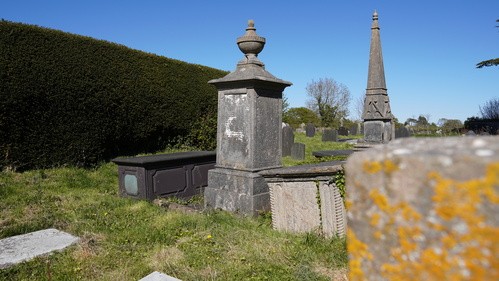
The grave of John Elias at St. Catherine’s Church, Llanfaes.
There were only a few chapels on Anglesey when he arrived.[15] But by the end of his ministry, forty-four chapels had been built[16] as the result of his ministry and others, such as the baptist minister, Christmas Evans. At that time, Anglesey was notorious for smuggling, adultery, drunkenness, and all kinds of evil. It was not a place one would go to for a holiday as one might today. Edward Morgan describes the state of the island in his biography of Elias:
The sins and iniquities of the people were like those of Sodom and Gomorrah, crying up to heaven for vengeance. But the Lord, instead of dealing with them according to their abominations and rebellions, showed the most tender compassion towards them, brought one of his choice ministers there, and commissioned him to publish to them peace and reconciliation through the blood of the Lamb! And great and astonishing were the effects which attended that ministry.[17]
Elias was such a popular preacher that he would attract a crowd of one thousand people in just half an hour, regardless of the season or time of day. Thousands would congregate to hear him in the open-air, and also at the chapels. During an Association meeting at Bala in 1807, the chapel was so full that hundreds stood outside unable to gain admission. After one of the ministers opened with prayer and a Bible reading, Elias went and stood on the windowsill of the chapel so that those standing outside would be able to hear him as well as those inside.[18]
According to a couple of eye-witnesses, on at least one occasion he preached to a crowd of between ten to twelve-thousand people at one time, which was quarter of the population of Anglesey at the time.[19] Remarkable things took place on that island during his ministry, the likes we have not seen since.
According to a couple of eye-witnesses, on at least one occasion he preached to a crowd of between ten to twelve-thousand people at one time, which was quarter of the population of Anglesey at the time.[19] Remarkable things took place on that island during his ministry, the likes we have not seen since.
Elias and the Drunkards
Dr. Owen Thomas has written a comprehensive biography of another great Calvinistic Methodist preacher: John Jones of Talsarn. In this biography he gives an account of an occasion where John Elias was preaching at an Association meeting at Caergybi on October, 1824. Around this time the Association meetings on Anglesey was mixed with al manner of people present, including many drunkards. Dr. Thomas recalled the following:
At the service at ten in the morning, after the late Mr. Owen Jones of Gelli had preached from Isaiah 47:21, and before Mr. William Morris of Cilgerran (as he then was) preached from Joel 2:31, Mr. Elias addressed the congregation, encouraging everyone to maintain sobriety and conduct fitting for a religious meeting during the Association. We were seated in the gallery, near the entrance by which the preachers ascended, our feet resting on the stairs they climbed. We were thus close to the pulpit and in an excellent position to observe the whole crowd.
He spoke with great force against drunkenness, as a sin which always and everywhere degrades a person more than perhaps any other sin; but he dwelt especially on its shamefulness at a religious gathering. He hoped there was no one present who would take advantage of such an assembly to bring disgrace upon their country, themselves, and religion.
[John Elias asked] “Are there drunkards here? I fear there are. May I plead with you, whatever else happens today, to control yourselves? If you have no respect for the our Great God, no respect for the laws of your country, no respect for yourselves—though I admit I am taking low ground,—will you at least, for today, for our sake, be sober and decent? By coming to a gathering like this to drink, get drunk, and behave disorderly, you are destroying our character. Our enemies in the land are not all dead yet. They are ready to use anything they think may serve against us. And we have nothing but our character to depend on. We are not wealthy; we are not learned; we are not clever; we have no high titles; we have no one among us in high office. But we do have our character; we think a great deal of our character; we intend to keep our character; and, if we can, we will not let anyone destroy it. And these drunkards at the Associations are destroying our character. They follow us poor Methodists around. What shall we do with them, brothers?”
“Shape them!” cried a voice from behind him, referring to the sermon just delivered.
“I feel,” he replied, becoming stirred, “at this very moment inclined to put them up for auction, to whoever will take them, so that we may no longer be troubled by them.”
Then, at the top of his voice, stretching out his arm as though holding them in his hand, he cried:
“Who will take them? Who will take them? Anglicans, will you take them? ‘Us? In our baptism we profess to renounce the devil and all his works. No, we will not take them!’”
A moment of silence followed.
“Independents, will you take them? ‘What? Us? We left the Church of England long ago because of its corruption; we will not take them!’”
Another brief silence.
“Baptists, will you take them? ‘Us? We immerse all our people in water to show that we receive only the clean: we will not take them!’”
Silence again.
“Wesleyans, will you take them? ‘What? We? Good works are the business of our lives: we do not want them!’”
Then there he stood, arm outstretched, as though still holding them, looking around the crowd and crying with the utmost force of his voice:
“Who will take them? Who will take them? Who will take them?”
Suddenly his whole nature seemed aroused; his eyes flashed; a strange emotion took hold of him. Turning his face to his left side, in a somewhat lower voice, yet audible to the whole crowd, he said:
“I can almost hear the devil, at my elbow, saying, ‘Hand them over to me; I will take them.’”
Then he lifted his eyes upward and, with an awfully sober and solemn expression, gazed around the congregation for about a quarter of a minute without speaking a word. Then, turning again to his left, shaking the forefinger of his right hand toward his elbow once, twice, three times, he cried with immense power, until his voice resounded through the town:
“I was about to say, devil, you may have them—but…”
Then lifting his eyes and throwing his hand upward toward heaven, with a tender, triumphant voice, he exclaimed:
“I hear Jesus crying, ‘I will take them! I will take them! I will take them! Unclean, to wash them; drunkards, to sober them; in all their filth, to cleanse them with my own blood!’”
By this point, the scene was extraordinary. The preachers in the gallery seemed bewildered. The vast crowd was in an uproar, and the effects were such that many broke out into joyful excitement. The remainder of that morning’s meeting was effectively ruined; indeed, the rest of the whole Association was almost entirely overshadowed until he himself preached finally in the chapel that evening, when, from John 3:15, he delivered one of the most powerful sermons of his life. If rhetorical imagination ever belonged to any man, it certainly belonged to John Elias.
But after all, his greatest excellence was his power of delivery. In that he was incomparable. One felt while listening to him that it could never be said better. We do not think there would have been any extraordinary greatness in his sermons merely as written compositions, even if they had been preserved word for word as they came from his lips; but in delivering them, he could breathe into them a life that made their influence upon his hearers strange, overwhelming, and tremendous.[12]
He spoke with great force against drunkenness, as a sin which always and everywhere degrades a person more than perhaps any other sin; but he dwelt especially on its shamefulness at a religious gathering. He hoped there was no one present who would take advantage of such an assembly to bring disgrace upon their country, themselves, and religion.
[John Elias asked] “Are there drunkards here? I fear there are. May I plead with you, whatever else happens today, to control yourselves? If you have no respect for the our Great God, no respect for the laws of your country, no respect for yourselves—though I admit I am taking low ground,—will you at least, for today, for our sake, be sober and decent? By coming to a gathering like this to drink, get drunk, and behave disorderly, you are destroying our character. Our enemies in the land are not all dead yet. They are ready to use anything they think may serve against us. And we have nothing but our character to depend on. We are not wealthy; we are not learned; we are not clever; we have no high titles; we have no one among us in high office. But we do have our character; we think a great deal of our character; we intend to keep our character; and, if we can, we will not let anyone destroy it. And these drunkards at the Associations are destroying our character. They follow us poor Methodists around. What shall we do with them, brothers?”
“Shape them!” cried a voice from behind him, referring to the sermon just delivered.
“I feel,” he replied, becoming stirred, “at this very moment inclined to put them up for auction, to whoever will take them, so that we may no longer be troubled by them.”
Then, at the top of his voice, stretching out his arm as though holding them in his hand, he cried:
“Who will take them? Who will take them? Anglicans, will you take them? ‘Us? In our baptism we profess to renounce the devil and all his works. No, we will not take them!’”
A moment of silence followed.
“Independents, will you take them? ‘What? Us? We left the Church of England long ago because of its corruption; we will not take them!’”
Another brief silence.
“Baptists, will you take them? ‘Us? We immerse all our people in water to show that we receive only the clean: we will not take them!’”
Silence again.
“Wesleyans, will you take them? ‘What? We? Good works are the business of our lives: we do not want them!’”
Then there he stood, arm outstretched, as though still holding them, looking around the crowd and crying with the utmost force of his voice:
“Who will take them? Who will take them? Who will take them?”
Suddenly his whole nature seemed aroused; his eyes flashed; a strange emotion took hold of him. Turning his face to his left side, in a somewhat lower voice, yet audible to the whole crowd, he said:
“I can almost hear the devil, at my elbow, saying, ‘Hand them over to me; I will take them.’”
Then he lifted his eyes upward and, with an awfully sober and solemn expression, gazed around the congregation for about a quarter of a minute without speaking a word. Then, turning again to his left, shaking the forefinger of his right hand toward his elbow once, twice, three times, he cried with immense power, until his voice resounded through the town:
“I was about to say, devil, you may have them—but…”
Then lifting his eyes and throwing his hand upward toward heaven, with a tender, triumphant voice, he exclaimed:
“I hear Jesus crying, ‘I will take them! I will take them! I will take them! Unclean, to wash them; drunkards, to sober them; in all their filth, to cleanse them with my own blood!’”
By this point, the scene was extraordinary. The preachers in the gallery seemed bewildered. The vast crowd was in an uproar, and the effects were such that many broke out into joyful excitement. The remainder of that morning’s meeting was effectively ruined; indeed, the rest of the whole Association was almost entirely overshadowed until he himself preached finally in the chapel that evening, when, from John 3:15, he delivered one of the most powerful sermons of his life. If rhetorical imagination ever belonged to any man, it certainly belonged to John Elias.
But after all, his greatest excellence was his power of delivery. In that he was incomparable. One felt while listening to him that it could never be said better. We do not think there would have been any extraordinary greatness in his sermons merely as written compositions, even if they had been preserved word for word as they came from his lips; but in delivering them, he could breathe into them a life that made their influence upon his hearers strange, overwhelming, and tremendous.[12]
Elias shows such a beautiful and clear understanding of the gospel as it relates to those who were considered among the worst in society—the drunkards. From Dr. Thomas’s account, we can see the contrast between Elias’s preaching of the gospel and the reaction of some of the the other ministers present. Many were outraged at his seeming acceptance of the drunkards, especially in light of his extension of God’s grace to them.
Unrelated to this event, in an essay titled ‘On Preaching the Gospel’, Elias writes: “Not everyone who is called a minister of the Gospel, preaches it. What he delivers may not be the Gospel, though so called. It may not be good news to a sinner, who sees his miserable state before God.”[21] This remains true today, perhaps more so than at any other time in our history.
Unrelated to this event, in an essay titled ‘On Preaching the Gospel’, Elias writes: “Not everyone who is called a minister of the Gospel, preaches it. What he delivers may not be the Gospel, though so called. It may not be good news to a sinner, who sees his miserable state before God.”[21] This remains true today, perhaps more so than at any other time in our history.
Lessons for the Church Today
We can learn valuable lessons from Elias and his address to the drunkards at the Caergybi Association meeting. Here are three ways Elias’s address can speak to us in our modern context:
1. The church must hold moral seriousness without abandoning compassion.
At the end he showed compassion and the love of Christ for the drunkards present, but before he did, he did not minimise their sin. He called it degrading, shameful, and destructive. Not only personally, but socially and spiritually. He was not embarrassed to name the sin publicly. Modern evangelical churches often struggle to maintain this balance.
One danger is moral compromise. Some fear that strong language about sin will appear judgemental, so they soften biblical teaching until repentance is barely mentioned in any concrete and specific way, only in general terms. This leads to a diluted gospel, little awareness of guilt, and a reduced urgency for salvation.
The opposite danger is moral superiority. Some rightly oppose sin but communicate it in ways that imply:
“Clean yourselves up before coming,”
“Respectable people belong here,”
“Your failures makes you unwelcome,”
And sadly, this is often communicated in many ways without the use of speech. It can be conveyed through the clothes we wear. The expectation that one should wear their ‘Sunday best’ can subtly suggest that only the well-presented truly belong. It is also communicated through body language, our greetings, who we choose to speak with after the service, and who we invite into our homes. Cliques form within society according to social class or perceived respectability. This should not be the case in the church. It creates a church that may defend morality but fail to reflect the heart of Christ.
Elias’s way was better. He treated sin seriously because sin is serious, but he did not treat sinners as disposable. This distinction matters. Sin is condemned. Sinners are invited. His dramatic pivot from “Who will take them?” to Christ’s “I will take them!” shows that the church’s message must never end with rebuke.
Churches should speak clearly about addiction, sexual immorality, greed, pride, and unbelief. Churches should also maintain biblical standards, yet communicate unmistakably:
“You are welcome here,”
“Christ receives broken people,”
“Grace is greater than your sin,”
Without moral seriousness, grace becomes cheap. And without compassion, truth becomes cruelty. Elias held both together, much to the disappointment of many present.
One danger is moral compromise. Some fear that strong language about sin will appear judgemental, so they soften biblical teaching until repentance is barely mentioned in any concrete and specific way, only in general terms. This leads to a diluted gospel, little awareness of guilt, and a reduced urgency for salvation.
The opposite danger is moral superiority. Some rightly oppose sin but communicate it in ways that imply:
“Clean yourselves up before coming,”
“Respectable people belong here,”
“Your failures makes you unwelcome,”
And sadly, this is often communicated in many ways without the use of speech. It can be conveyed through the clothes we wear. The expectation that one should wear their ‘Sunday best’ can subtly suggest that only the well-presented truly belong. It is also communicated through body language, our greetings, who we choose to speak with after the service, and who we invite into our homes. Cliques form within society according to social class or perceived respectability. This should not be the case in the church. It creates a church that may defend morality but fail to reflect the heart of Christ.
Elias’s way was better. He treated sin seriously because sin is serious, but he did not treat sinners as disposable. This distinction matters. Sin is condemned. Sinners are invited. His dramatic pivot from “Who will take them?” to Christ’s “I will take them!” shows that the church’s message must never end with rebuke.
Churches should speak clearly about addiction, sexual immorality, greed, pride, and unbelief. Churches should also maintain biblical standards, yet communicate unmistakably:
“You are welcome here,”
“Christ receives broken people,”
“Grace is greater than your sin,”
Without moral seriousness, grace becomes cheap. And without compassion, truth becomes cruelty. Elias held both together, much to the disappointment of many present.
2. The church must view sinners not as nuisances, but as candidates for redemption.
This is a great challenge for the church today. Elias was frustrated by the disgrace these drunkards brought to Methodist gatherings, but his imagination did not stop at social damage. He ultimately framed them in spiritual terms. The questions was not “How do we get rid of these people?” but “Whose will they be?” This changes everything.
In our contemporary church contexts, non-Christians are often viewed primarily as cultural opponents—especially in churches that have seen very little growth—and increasingly as threats to Christian values, the cause of societal decline, and those responsible for the loss of traditional values. This mindset breeds fear, tribalism, a defensive posture, and culture-war mentalities. Because of this, we are seeing a rise of Christian Nationalism, which is, in my view, more damaging to the church than those it opposes (you can read my article on Christian Nationalism here).
Elias offers a gospel-centred alternative. Even those publicly disruptive sinners were not beyond hope. Jesus was not ashamed to claim the filthy, the addicted, the disgraced. Churches should not just lament secularism, addiction crises, or moral collapse. Neither should they despise those perceived to be driving moral decline, whether politicians, members of other religions, or those who follow and promote troubling ideologies. They should ask:
How do we reach these people?
How do we embody Christ’s welcoming power?
How do we proclaim redemption to those with whom we disagree?
This requires courage, hospitality, patience, and missional thinking. But more than anything else, it requires love. “Love thy neighbour”, Jesus said. Christians can disagree with others and still love them to death. Welcoming sinners does not mean affirming sin; it means believing that no sinner is beyond Christ’s reach. To sustain this perspective, we must understand the severity of our own sin before a holy God. It is not the amount of sin in our lives that condemns us, but the fact of sin in our lives. We are no more worthy of the gospel than those who outwardly revel in sinfulness. And they are no more worthy of judgement than you and me.
In our contemporary church contexts, non-Christians are often viewed primarily as cultural opponents—especially in churches that have seen very little growth—and increasingly as threats to Christian values, the cause of societal decline, and those responsible for the loss of traditional values. This mindset breeds fear, tribalism, a defensive posture, and culture-war mentalities. Because of this, we are seeing a rise of Christian Nationalism, which is, in my view, more damaging to the church than those it opposes (you can read my article on Christian Nationalism here).
Elias offers a gospel-centred alternative. Even those publicly disruptive sinners were not beyond hope. Jesus was not ashamed to claim the filthy, the addicted, the disgraced. Churches should not just lament secularism, addiction crises, or moral collapse. Neither should they despise those perceived to be driving moral decline, whether politicians, members of other religions, or those who follow and promote troubling ideologies. They should ask:
How do we reach these people?
How do we embody Christ’s welcoming power?
How do we proclaim redemption to those with whom we disagree?
This requires courage, hospitality, patience, and missional thinking. But more than anything else, it requires love. “Love thy neighbour”, Jesus said. Christians can disagree with others and still love them to death. Welcoming sinners does not mean affirming sin; it means believing that no sinner is beyond Christ’s reach. To sustain this perspective, we must understand the severity of our own sin before a holy God. It is not the amount of sin in our lives that condemns us, but the fact of sin in our lives. We are no more worthy of the gospel than those who outwardly revel in sinfulness. And they are no more worthy of judgement than you and me.
3. The church must preach Christ as the answer, not just behavioural reform.
Elias was not offering a self-help program, though some form of therapy or rehabilitation is often helpful today for those struggling with addiction. He did not proclaim a path of better habits, respectability, social decency, or external reform. He proclaimed Jesus. No one else in society would want such sinners apart from two: the devil, to destroy them further, and Christ, to save them.
Modern evangelicalism can sometimes drift toward reducing Christianity to good morals, family stability, morally conservative politics, and lifestyle change. These may have value, but they are not the gospel. Behavioural reform alone cannot remove guilt, reconcile sinners to God, change the heart, defeat spiritual bondage, or break the power of idols. A drunkard may become sober and still be as lost as he was in his drunken state. Elias focusses on the fact that Christ cleanses, Christ redeems, Christ transforms. His emphasis was on blood-bought forgiveness and the divine intervention of God in the sinner’s life.
Preaching must centre on repentance, faith, the cross, the resurrection, grace, and regeneration, not simply: “Be a better person,” “Improve yourself,” “Follow Christian values.” If the church only preaches morality it will produce either respectable Pharisees or discouraged failures, but not true born-again Christians. Only Christ can save.
Modern evangelicalism can sometimes drift toward reducing Christianity to good morals, family stability, morally conservative politics, and lifestyle change. These may have value, but they are not the gospel. Behavioural reform alone cannot remove guilt, reconcile sinners to God, change the heart, defeat spiritual bondage, or break the power of idols. A drunkard may become sober and still be as lost as he was in his drunken state. Elias focusses on the fact that Christ cleanses, Christ redeems, Christ transforms. His emphasis was on blood-bought forgiveness and the divine intervention of God in the sinner’s life.
Preaching must centre on repentance, faith, the cross, the resurrection, grace, and regeneration, not simply: “Be a better person,” “Improve yourself,” “Follow Christian values.” If the church only preaches morality it will produce either respectable Pharisees or discouraged failures, but not true born-again Christians. Only Christ can save.
Enduring Legacy
John Elias teaches that the church must be uncompromising about sin, yet overflowing with love and hope for all sinners. The church must also view unbelievers not as problems, but as people made in the image of God whom Christ may still redeem. And finally, the church must not just offer reform, but the living Christ as Saviour. The evangelical church’s mission is not to produce respectable outsider conforming to a safe Christian culture, but redeemed sinners through the gospel of our Lord.
As Elias powerfully dramatised: the world may reject sinners, religion may fear them, the devil may claim them, but Jesus still says, “I will take them.”
As Elias powerfully dramatised: the world may reject sinners, religion may fear them, the devil may claim them, but Jesus still says, “I will take them.”
Written by: Pastor Gwydion Emlyn
[1] R. Tudur Jones, John Elias—Pregethwr a Phendefig, (Mudiad Efengylaidd Cymru, 1975), 22.
[2] My translation from: R. Parry, Adgofion am John Elias, (Dinbych: Thomas Gee, 1859), 7.
[3] My translation from: Ibid., 8.
[4] R. Tudur Jones, John Elias—Pregethwr a Phendefig, 22.
[5] John Elias, Hunangofiant John Elias, (ed. Goronwy P. Owen; Mudiad Efengylaidd Cymru, 1974), 49-50.
[6] Ibid., 50-2.
[7] My translation from: Ibid., 57.
[8] Edward Thomas, Y Parchedig John Elias o Fôn, (Gwrecsam: Hughes a’i Fab, 1905), 12.
[9] John Elias, Hunangofiant John Elias, 60.
[10] Ibid., 61-2.
[11] Ibid., 64.
[12] J. Roberts & J. Jones, Cofiant y Parchedig John Elias, o Fon, (Liverpool: M. A. Jones, 1850), 29-30.
[13] John Elias, Hunangofiant John Elias, 65-6.
[14] W. Pritchard, John Elias a’i Oes, (Caernarvon: D. O’Brien Owen, 1911), 298-9.
[15] John Elias, Hunangofiant John Elias, 67.
[16] Edward Thomas, Y Parchedig John Elias o Fôn, 30.
[17] Edward Morgan, John Elias: Life and Letters, (Edinburgh: The Banner of Truth Trust, 1973), 43.
[18] Owen Jones, Some of the Great Preachers of Wales, (London: Passmore & Alabaster, 1885), 244.
[19] R. Parry, Adgofion am John Elias, 14.
[20] My translation and syntax arrangement, taken from: Owen Thomas, Cofiant y Parchedig John Jones, Talsarn, (Wrexham: Hughes and Son), 860-2.
[21] Rev. E. Morgan, Valuable letters, essays, and other papers of the late Reverend John Elias of Anglesea, (Carnarvon: H. Humphreys, 1847), 216.
[2] My translation from: R. Parry, Adgofion am John Elias, (Dinbych: Thomas Gee, 1859), 7.
[3] My translation from: Ibid., 8.
[4] R. Tudur Jones, John Elias—Pregethwr a Phendefig, 22.
[5] John Elias, Hunangofiant John Elias, (ed. Goronwy P. Owen; Mudiad Efengylaidd Cymru, 1974), 49-50.
[6] Ibid., 50-2.
[7] My translation from: Ibid., 57.
[8] Edward Thomas, Y Parchedig John Elias o Fôn, (Gwrecsam: Hughes a’i Fab, 1905), 12.
[9] John Elias, Hunangofiant John Elias, 60.
[10] Ibid., 61-2.
[11] Ibid., 64.
[12] J. Roberts & J. Jones, Cofiant y Parchedig John Elias, o Fon, (Liverpool: M. A. Jones, 1850), 29-30.
[13] John Elias, Hunangofiant John Elias, 65-6.
[14] W. Pritchard, John Elias a’i Oes, (Caernarvon: D. O’Brien Owen, 1911), 298-9.
[15] John Elias, Hunangofiant John Elias, 67.
[16] Edward Thomas, Y Parchedig John Elias o Fôn, 30.
[17] Edward Morgan, John Elias: Life and Letters, (Edinburgh: The Banner of Truth Trust, 1973), 43.
[18] Owen Jones, Some of the Great Preachers of Wales, (London: Passmore & Alabaster, 1885), 244.
[19] R. Parry, Adgofion am John Elias, 14.
[20] My translation and syntax arrangement, taken from: Owen Thomas, Cofiant y Parchedig John Jones, Talsarn, (Wrexham: Hughes and Son), 860-2.
[21] Rev. E. Morgan, Valuable letters, essays, and other papers of the late Reverend John Elias of Anglesea, (Carnarvon: H. Humphreys, 1847), 216.
Bibliography
Elias, John. Hunangofiant John Elias. ed. Goronwy P. Owen; Mudiad Efengylaidd Cymru, 1974.
Jones, Owen. Some of the Great Preachers of Wales. London: Passmore & Alabaster, 1885.
Jones, R. Tudur. John Elias—Pregethwr a Phendefig. Mudiad Efengylaidd Cymru, 1975.
Morgan, E. Valuable letters, essays, and other papers of the late Reverend John Elias of Anglesea: Together with observations on his publications. Carnarvon: H. Humphreys, 1847.
Morgan, Edward. John Elias: Life and Letters. Edinburgh: The Banner of Truth Trust, 1973.
Parry, R. Adgofion am John Elias. Dinbych: Thomas Gee, 1859.
Pritchard, W. John Elias a’i Oes. Caernarvon: D. O’Brien Owen, 1911.
Roberts, J. & Jones, J. Cofiant y Parchedig John Elias, o Fon. Liverpool: M. A. Jones, 1850.
Thomas, Edward. Y Parchedig John Elias o Fôn. Gwrecsam: Hughes a’i Fab, 1905.
Thomas, Owen. Cofiant y Parchedig John Jones, Talsarn. Wrexham: Hughes and Son.
Elias, John. Hunangofiant John Elias. ed. Goronwy P. Owen; Mudiad Efengylaidd Cymru, 1974.
Jones, Owen. Some of the Great Preachers of Wales. London: Passmore & Alabaster, 1885.
Jones, R. Tudur. John Elias—Pregethwr a Phendefig. Mudiad Efengylaidd Cymru, 1975.
Morgan, E. Valuable letters, essays, and other papers of the late Reverend John Elias of Anglesea: Together with observations on his publications. Carnarvon: H. Humphreys, 1847.
Morgan, Edward. John Elias: Life and Letters. Edinburgh: The Banner of Truth Trust, 1973.
Parry, R. Adgofion am John Elias. Dinbych: Thomas Gee, 1859.
Pritchard, W. John Elias a’i Oes. Caernarvon: D. O’Brien Owen, 1911.
Roberts, J. & Jones, J. Cofiant y Parchedig John Elias, o Fon. Liverpool: M. A. Jones, 1850.
Thomas, Edward. Y Parchedig John Elias o Fôn. Gwrecsam: Hughes a’i Fab, 1905.
Thomas, Owen. Cofiant y Parchedig John Jones, Talsarn. Wrexham: Hughes and Son.
Recent
Archive
2026
2025
Categories
no categories
1 Comment
O to have been there when John Alias was preaching. A truly inspirational article.
nWe pray that God would soon raise up new John Aliases to light the fire of revival in north Wales!